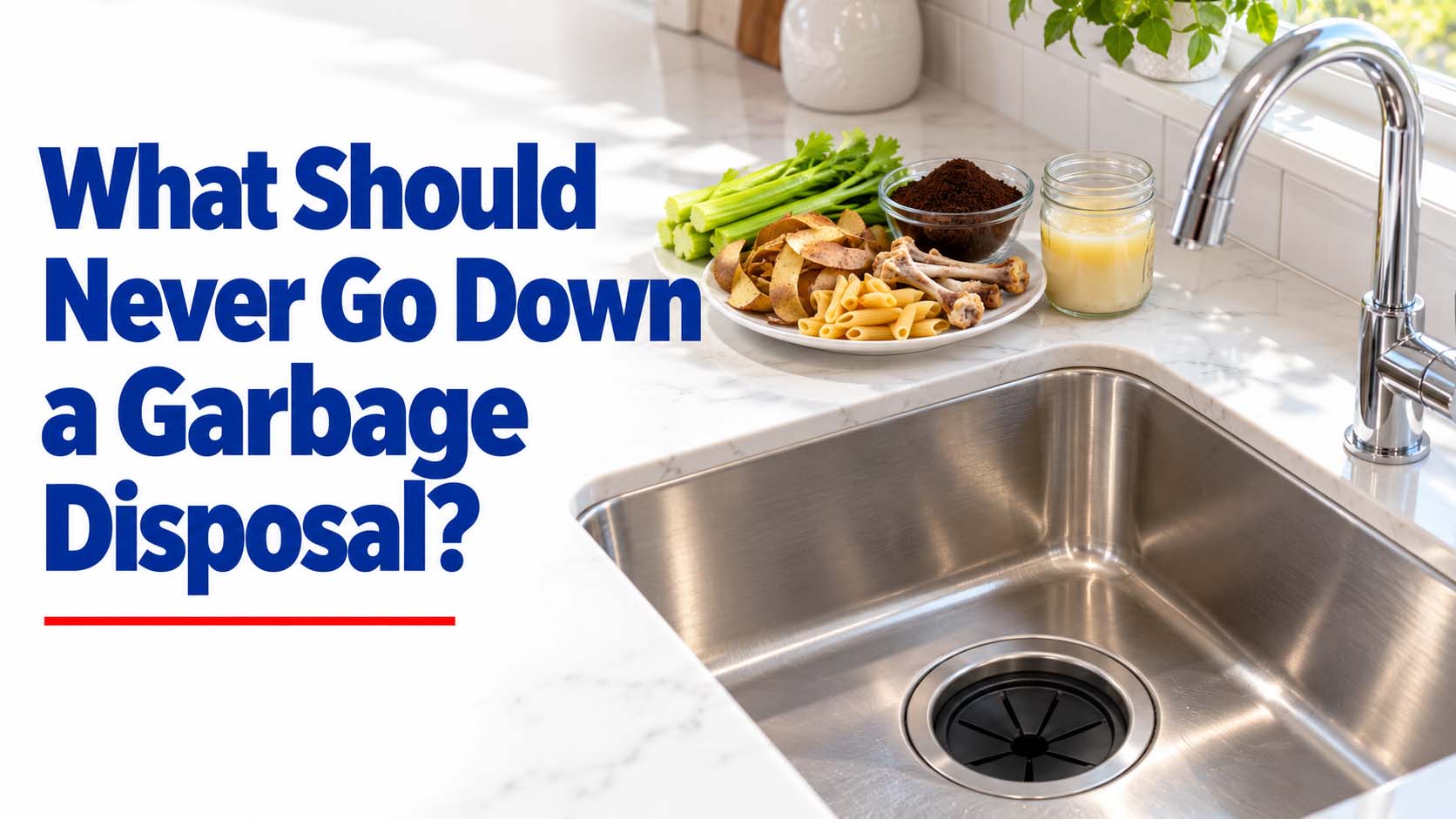
A garbage disposal makes kitchen cleanup easier, but its name can be misleading. It is designed to process suitable food scraps—not everything left on a plate or sitting beside the sink.
Grease, cooking oil, nonfood objects, and chemical drain openers should stay out of your garbage disposal. Other items, including fibrous vegetables, bones, coffee grounds, and eggshells, require more care because manufacturer guidance varies by model.
For Converse homeowners, knowing what to keep out can help prevent disposal jams, unpleasant odors, and kitchen drain backups. Here is a practical guide from Nation Plumbing.
Why What You Put Down the Disposal Matters
Your garbage disposal and your kitchen drain perform different jobs.
The disposal breaks food into smaller particles. The drain carries those particles and wastewater away. Even when the disposal successfully grinds something, the material still has to travel through your plumbing.
That is why a disposal can sound normal while the sink drains slowly. The problem may be in the outlet, trap, or downstream drain rather than the disposal itself.
Good disposal habits should account for both the equipment and the plumbing connected to it.
1. Grease, Cooking Oil, and Fat
Keep cooking grease out of the disposal and every other household drain.
Common examples include:
- Bacon grease.
- Cooking oil.
- Meat drippings.
- Butter and shortening.
- Greasy sauces.
Grease can collect inside wastewater pipes and contribute to blockages. A disposal does not solve that problem by grinding the food mixed with it. www.austintexas.gov
What to Do Instead
Let grease cool, collect it in a suitable container, and dispose of it according to local waste guidance. Wipe greasy pans and dishes before washing them.
Do not rely on hot water or dish soap to make pouring grease down the sink a safe habit.
2. Plastic, Glass, Metal, and Other Nonfood Objects
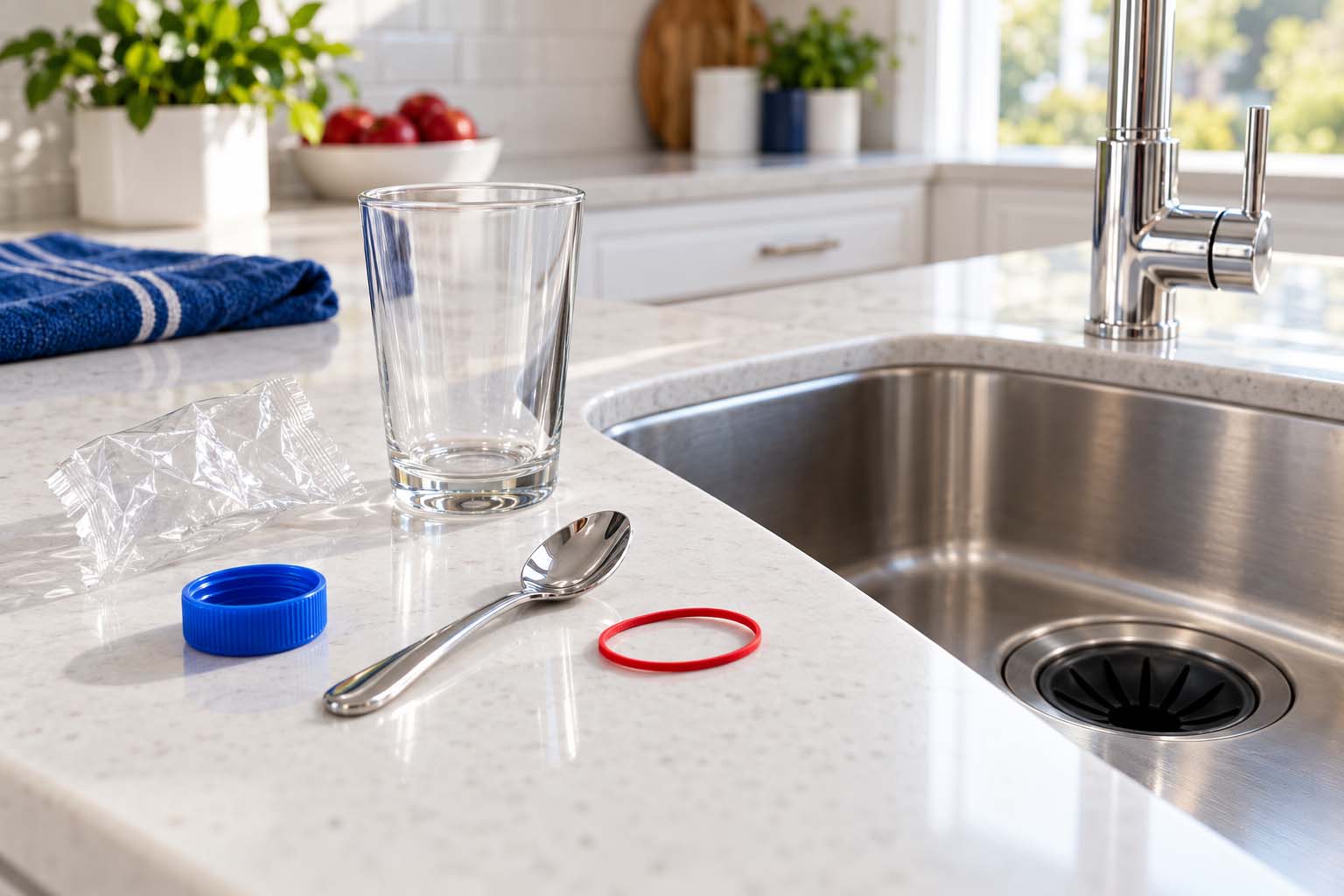
A disposal should never serve as a trash can for packaging or household items.
Keep these objects out:
- Plastic wrappers and produce stickers.
- Bottle caps.
- Twist ties and rubber bands.
- Glass fragments.
- Utensils.
- Paper towels and wipes.
- Sponges and cleaning cloths.
These materials can jam or damage the equipment. Manufacturer safety instructions specifically exclude nonfood waste such as glass, plastic, and metal.
What to Do Instead
Check plates and food containers before scraping them into the sink. Remove produce stickers before washing fruits and vegetables.
If something falls inside, turn the disposal off immediately. Never reach into it with your hand. Follow the manufacturer’s instructions for disconnecting power and retrieving objects, or arrange professional service.
3. Chemical Drain Openers
A backed-up sink can make a bottle of drain cleaner seem like an easy solution. However, chemical drain openers may be unsuitable for the disposal and its components.
InSinkErator’s care instructions advise against using chemical drain openers or other drain-cleaning products in its disposers.
A chemical product also does not tell you whether the problem is a jammed disposal, a blocked trap, or a restriction farther down the line.
What to Do Instead
Stop using the affected sink and identify the cause of the backup.
If you have already added a chemical product, do not mix it with anything else or attempt to plunge the drain. Tell your plumber the product name and when it was used before service begins.
4. Large Bones and Hard Shells
Do not assume your disposal can handle large bones or hard seafood shells.
Equipment capabilities vary. Some models can process certain small bones, while manufacturer instructions exclude large whole bones and items such as clam or oyster shells.
What to Do Instead
Put large bones and hard shells in the trash. For other hard food scraps, check the instructions for your exact disposal model.
There is little benefit in testing the equipment’s limits during cleanup—especially if it already struggles, makes unusual noises, or frequently jams.
Foods Best Kept Out Unless Your Model Allows Them
Many online disposal lists treat every food as universally safe or universally forbidden. The reality is more specific.
Manufacturers offer different grinding systems, and the amount of food matters. For example, InSinkErator distinguishes between models that handle tougher fibrous scraps and standard models with more limitations. Moen also notes that smaller units are not intended to process bones or fibrous husks.
For an easy household routine, place the following items in the trash or an appropriate compost collection rather than feeding them into the disposal.
Fibrous Vegetables and Husks
Examples include:
- Corn husks.
- Artichoke leaves.
- Celery stalks.
- Tough vegetable stems.
- Stringy peels.
Some equipment can handle certain fibrous foods, but others cannot. Check your manual before putting these scraps into the disposal.
Large Quantities of Coffee Grounds
Do not empty a full coffee filter or large batch of grounds into the sink.
InSinkErator advises against grinding large amounts of coffee grounds. Its guidance also distinguishes between a material being grindable and the water flow needed to move particles through the drain.
Discarding grounds outside the sink is a simple way to reduce the amount of solids entering your plumbing.
Eggshells
Eggshells are not universally prohibited by disposal manufacturers, so it is inaccurate to say that one shell will always damage the equipment.
However, you do not need to send them down the drain. Put them in the trash or an appropriate compost container, particularly if your sink has a history of recurring clogs.
Avoid treating eggshells as a required disposal-cleaning method. Follow your manufacturer’s cleaning instructions instead.
Large Amounts of Rice, Pasta, Potato Peels, or Leftovers
A few incidental scraps and an entire pot of leftovers are different loads.
Rather than pushing large amounts of food into the disposal, scrape cookware and plates first. Manufacturers recommend feeding suitable waste gradually instead of loading the grinding chamber all at once.
Keeping bulk food waste out is especially useful when your kitchen drain is already slow or prone to backing up.
A Quick Garbage Disposal Checklist
| Item | Recommended household approach |
|---|---|
| Grease, oil, and cooking fat | Keep out of all drains |
| Plastic, glass, metal, and packaging | Never put in the disposal |
| Chemical drain openers | Keep out; follow equipment instructions |
| Large bones and hard seafood shells | Dispose of in the trash |
| Fibrous scraps and husks | Keep out unless your model specifically permits them |
| Coffee grounds and eggshells | Prefer trash or suitable compost collection |
| Large batches of leftovers | Scrape into trash or suitable compost collection |
| Small, suitable food scraps | Feed gradually according to the manufacturer’s instructions |
How to Use Your Garbage Disposal Properly
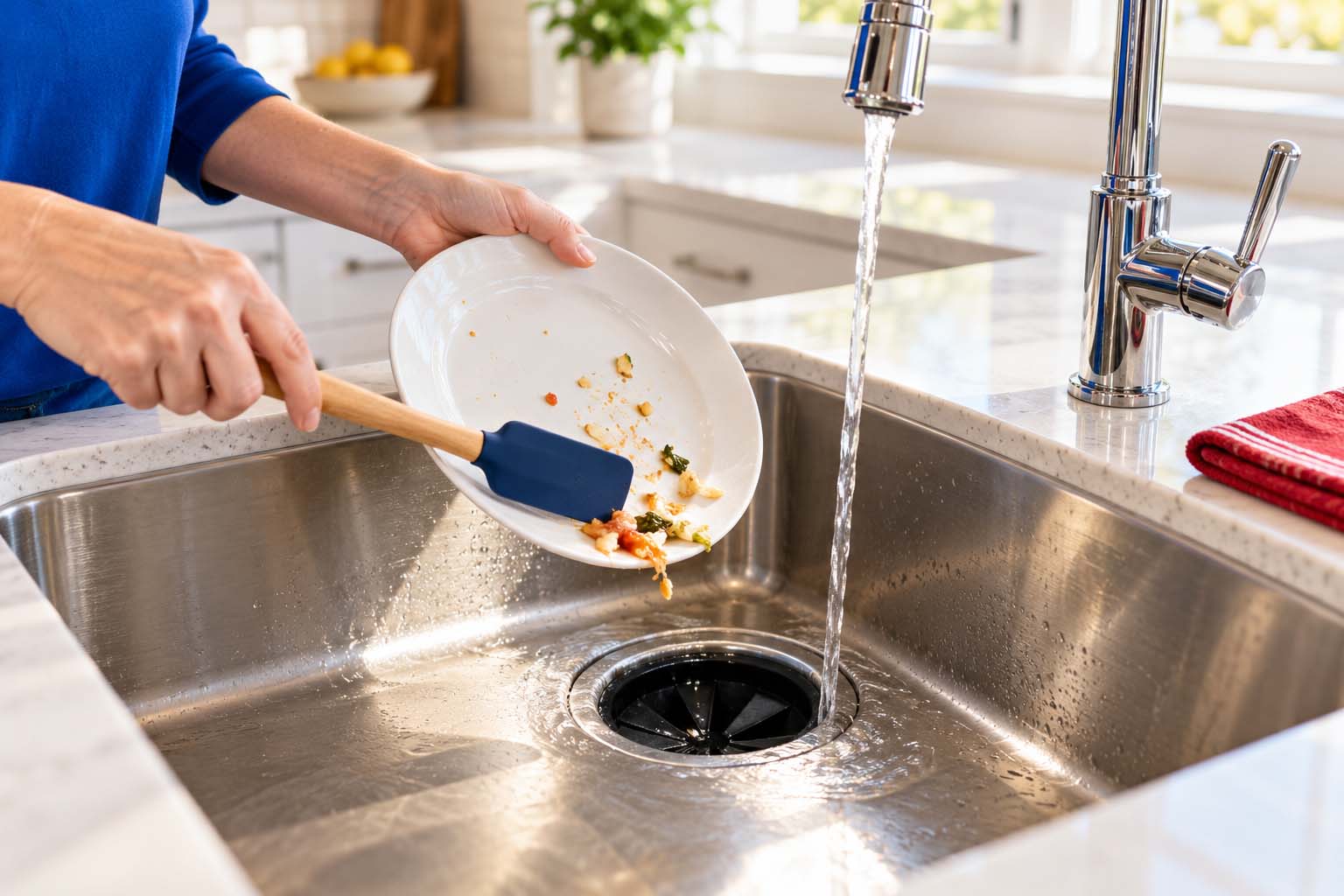
What you keep out matters, but so does how you operate the equipment.
Use the Recommended Water Flow
Follow your disposal’s operating instructions. InSinkErator recommends cold water during grinding and continuing the water briefly after the food has been processed.
Running the disposal dry or stopping water too soon can leave food behind.
Feed Scraps Gradually
Allow the disposal to process suitable scraps in manageable amounts. Avoid packing the chamber full before switching it on.
If the sound changes unexpectedly or the equipment stops grinding, turn it off rather than adding more food.
Keep the Sink Opening Clear
Remove utensils, packaging, and other objects before starting cleanup. A sink strainer can help catch debris when the disposal is not in use.
Follow the Cleaning Instructions
Clean accessible components only as directed by the manufacturer, with power disconnected where required.
Odors may come from food residue in the grinding chamber or splash guard. InSinkErator identifies retained food and insufficient water flow as possible contributors to disposal odors.
Persistent odors deserve further attention, especially when accompanied by slow drainage or backups.
What If You Accidentally Put the Wrong Item Down?
One mistake does not automatically mean you need a new disposal.
The next step depends on what entered the equipment and how it is behaving.
If It Hums Without Grinding
Turn it off. A humming disposal may be jammed, and repeatedly switching it on will not identify or remove the obstruction.
Use only the troubleshooting procedure specified for your model. Never put your hand inside the disposal.
If the Sink Stops Draining
Stop adding water and avoid running the dishwasher if it drains through the affected plumbing.
A disposal that runs while water remains in the sink may have a blocked outlet or downstream drain. Repeatedly operating it is unlikely to resolve every type of blockage.
If You Hear a New Metallic or Grinding Noise
Turn the unit off promptly. A dropped utensil or another foreign object may be inside.
Arrange service if you cannot safely resolve the issue using the manufacturer’s instructions.
If Water Leaks Under the Sink
Stop using the affected equipment and check for visible water without touching wet electrical components.
Leaks can involve the disposal, its connections, or nearby plumbing. The source needs to be identified before deciding whether repair or replacement is appropriate.
When Should You Call a Plumber?

Schedule an evaluation when:
- The disposal repeatedly jams.
- It hums but does not grind.
- The kitchen sink keeps backing up.
- Water leaks beneath the cabinet.
- Dishwasher use causes water to rise in the sink.
- Unusual noises continue.
- Odors persist despite appropriate cleaning.
A stronger or newer disposal will not necessarily fix a drain blockage. Likewise, drain cleaning will not repair a damaged disposal. Identifying the cause helps you choose the right service.
Frequently Asked Questions
Can I put coffee grounds down the garbage disposal?
Manufacturer guidance varies, but avoid large quantities. Putting grounds in the trash or an appropriate compost container reduces the solids entering your drain.
Are eggshells bad for garbage disposals?
Some manufacturers allow them, so they are not universally forbidden. Follow your model’s instructions, and avoid using eggshells as a substitute for recommended cleaning.
Can I put potato peels down the disposal?
Check your model’s guidance. As a practical precaution, discard large batches of peels outside the sink instead of loading them into the disposal.
Is hot water better when running the disposal?
Follow the manufacturer’s instructions. Many disposals specify cold water during grinding. Hot water does not make grease suitable for disposal.
Can a garbage disposal cause a kitchen sink clog?
Disposal use can send food particles into the drain, but the actual restriction may be in the disposal outlet, trap, or farther downstream. An evaluation can help locate the problem.
Should I replace a disposal that keeps clogging?
First determine whether the equipment is jamming or the connected drain is backing up. Replacement may be appropriate for damaged equipment, but it will not automatically resolve a plumbing restriction.
Garbage Disposal and Kitchen Drain Service in Converse, TX
Keeping the wrong materials out of your disposal can make cleanup easier and help reduce preventable plumbing problems.
If your disposal keeps jamming, leaks under the sink, or leaves you with standing water, Nation Plumbing can evaluate the equipment and accessible drain connections. We explain repair, replacement, or drain-service options based on what we find.
Contact Nation Plumbing to schedule garbage disposal or kitchen drain service in Converse, TX.