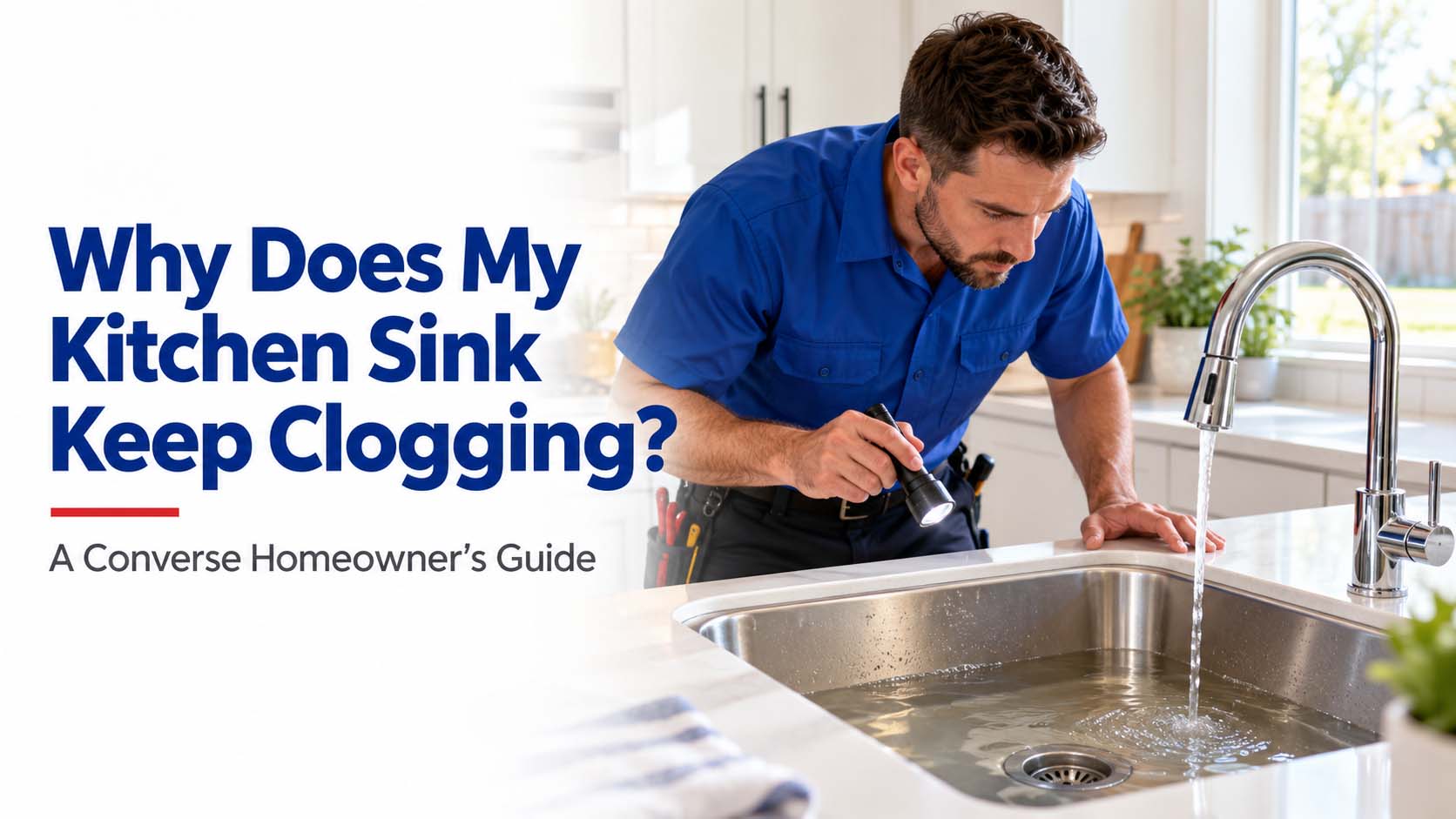
A kitchen sink that clogs once is frustrating. A sink that keeps clogging—even after you plunge it or clear the drain—can turn cooking, washing dishes, and cleaning up into a daily headache.
Recurring kitchen sink clogs often happen because grease and food debris remain inside the drain, a blockage sits farther down the line, or a plumbing problem prevents wastewater from flowing properly. Restoring some drainage does not always mean the underlying problem has been resolved.
For homeowners in Converse, TX, the next step is understanding what keeps causing the backup. This guide explains common causes, what your sink’s symptoms may tell you, and when to contact Nation Plumbing for an evaluation.
Common Reasons Your Kitchen Sink Keeps Clogging
1. Grease Is Building Up Inside the Drain
Cooking grease is one of the most common contributors to kitchen drain problems. Bacon fat, cooking oil, butter, and greasy sauces can enter the drain while you rinse pans or wash dishes.
Over time, grease can collect along the inside of the pipe and catch other debris, narrowing the space available for wastewater to flow. A garbage disposal does not prevent this buildup; it breaks down food but does not remove grease from the wastewater. AustinTexas.gov
If your sink drains better after a quick clearing but slows down again soon afterward, buildup may still be present farther along the drain.
What helps: Let cooking grease cool, collect it in an appropriate container, and dispose of it with household trash according to local guidance. Wipe greasy cookware before washing it.
2. Too Much Food Waste Is Going Down the Sink
A garbage disposal can make cleanup easier, but it does not make every load of food scraps suitable for your plumbing.
Sending large amounts of waste through the disposal can contribute to drainage problems, particularly when the line already contains buildup. For a sink that repeatedly clogs, keeping more scraps out of the drain is a useful first step.
Scrape plates, pans, and cutting boards into the trash or an appropriate compost container before rinsing them. Use a sink strainer to catch loose debris, and empty it regularly.
What helps: Treat the disposal as a tool for handling suitable incidental scraps. Follow your model’s instructions for food types, quantities, and operation.
3. The Garbage Disposal Is Jammed or Being Used Incorrectly
A disposal problem and a drain blockage can look similar, but they are different issues.
A jammed disposal may hum without grinding. A working disposal may grind normally while water backs up because the outlet or downstream pipe is blocked.
Using water correctly also matters. InSinkErator recommends running a steady flow of cold water while operating its disposals and allowing water to continue briefly after grinding finishes. Always follow the instructions for your particular equipment.
What helps: If the disposal hums, stops, or behaves unusually, turn it off. Do not repeatedly run it against a jam, and never put your hand inside it. Follow the manufacturer’s troubleshooting instructions or schedule service.
4. Debris Is Collecting in the P-Trap
The curved pipe underneath your sink is called the P-trap. It holds water that helps prevent sewer gases from entering your home through the drain.
Food debris or an accidentally dropped object can collect in this area. Clearing the trap may restore drainage when the blockage is there.
However, if the sink keeps clogging after the trap has been cleared, the restriction may be beyond the visible plumbing beneath the cabinet.
What helps: Pay attention to how quickly the problem returns. Repeatedly cleaning the same accessible section will not resolve a blockage farther down the line.
5. A Previous Clearing Only Partially Opened the Drain
A plunger or drain cable may restore flow by opening a path through a blockage. Depending on the obstruction and method used, some material can remain inside the pipe.
That remaining buildup can catch more debris, causing another clog.
This may explain a familiar cycle:
- The sink slows down.
- You clear it enough for water to drain.
- It works for a few days or weeks.
- The same problem returns.
What helps: When clogs keep coming back, ask for an evaluation of the recurring problem. The appropriate service depends on the blockage, pipe condition, and available access.
6. The Drain Has a Pipe or Installation Problem
Not every recurring clog starts with something going down the sink.
Drainage problems can also involve pipe condition, alignment, slope, or the arrangement of connections under the sink. If the problem began after a kitchen remodel, sink replacement, or disposal installation, that timing is useful information for a plumber.
What helps: Explain when the trouble started and whether any plumbing work happened shortly beforehand. An inspection can help determine whether the issue involves buildup, the installation, or both.
What Your Sink’s Symptoms May Tell You
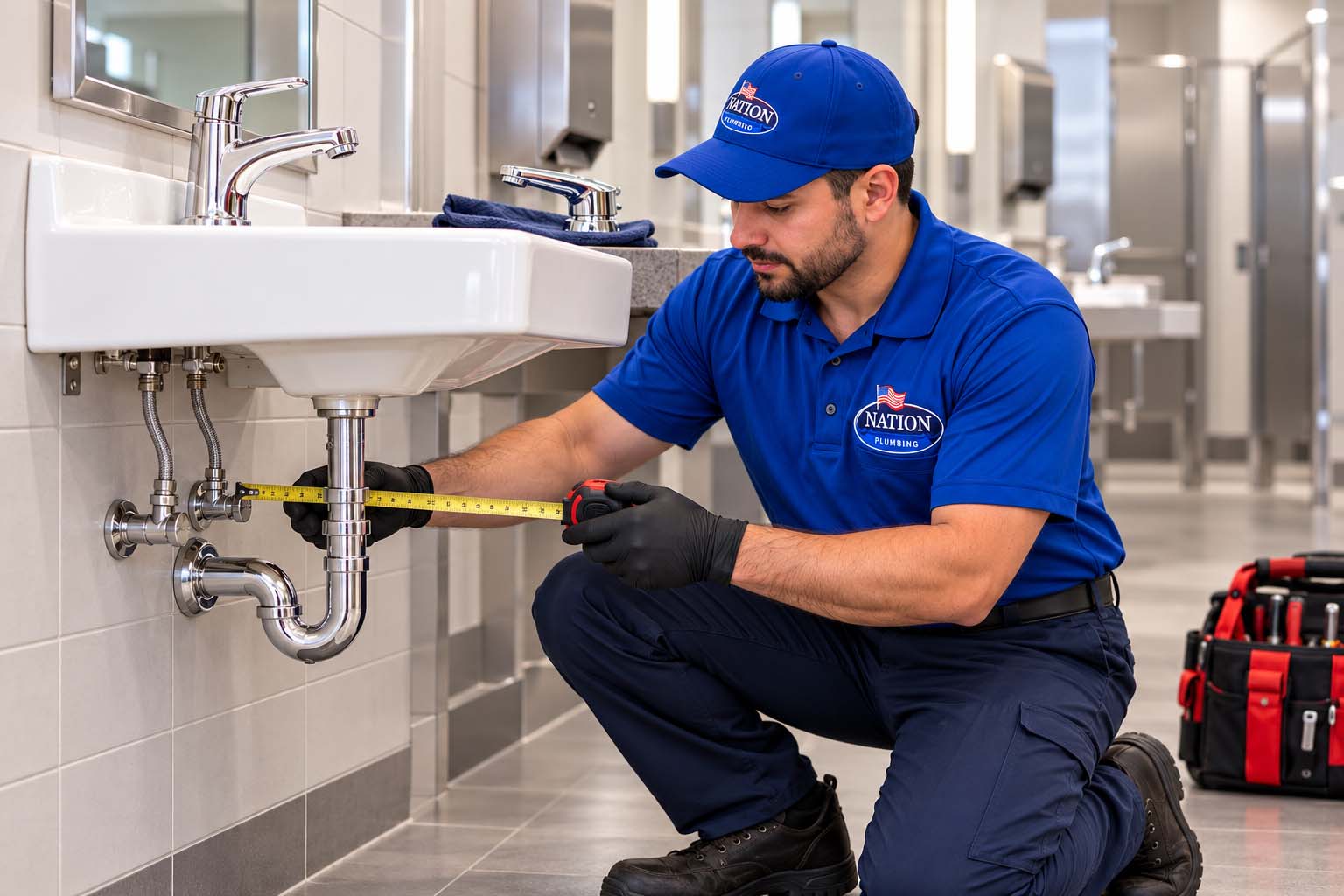
The way your sink backs up can help guide an evaluation, although symptoms alone cannot confirm the cause.
| What you notice | What it may suggest |
|---|---|
| The sink drains slowly but eventually empties | A partial restriction in the drain |
| The disposal hums without grinding | A possible disposal jam or equipment problem |
| Water rises in the other bowl of a double sink | A restriction in a shared section of the sink drain |
| The sink backs up while the dishwasher drains | A restriction or connection issue affecting the dishwasher’s drainage path |
| The clog returns soon after clearing | Remaining buildup or an unresolved downstream problem |
| Several fixtures back up or drain poorly | A possible problem in a shared drain or sewer line |
A single kitchen sink clog does not automatically mean you need sewer line repair. Likewise, multiple affected fixtures deserve a broader evaluation than a sink-only blockage.
What Should You Do When the Kitchen Sink Backs Up?
Stop Adding Water
Turn off the faucet and stop using the disposal. If the dishwasher drains through the affected plumbing, avoid running it until the drainage problem is addressed.
Continuing to add water can cause the sink to overflow or make an existing leak worse.
Check for Visible Leaks
Look beneath the sink for dripping connections, wet cabinet surfaces, or water collecting around the disposal.
If you find a leak, stop using the affected fixtures. Keep away from wet electrical outlets or equipment, and arrange service.
Remove Accessible Surface Debris
With the disposal off, check the strainer or drain opening for visible debris that can be removed safely without reaching into the disposal.
Removing surface debris may help, but it will not clear a deeper obstruction.
Be Cautious With Repeated DIY Attempts
If a simple attempt does not restore drainage, or the clog returns quickly, repeated troubleshooting may delay identifying the cause.
Do not plunge or disassemble a drain containing chemical cleaner. Tell your plumber if you have used a drain product, including the product name and when you applied it.
Should You Use Chemical Drain Cleaner?
Before using any drain product, check its label and the instructions for your plumbing equipment. Some products are unsuitable for garbage disposals; InSinkErator specifically advises against chemical drain openers in its disposal care instructions.
For a recurring clog, repeatedly adding cleaner also leaves an important question unanswered: Why does the blockage keep coming back?
Never mix drain cleaners with other cleaners or household chemicals. If a product fails to clear the drain, stop and contact a plumber before attempting further work.
Can Hot Water Clear a Greasy Kitchen Drain?
Hot water is not a dependable solution for recurring grease buildup.
Even if drainage improves temporarily, that does not establish that the pipe is clear. The better prevention strategy is to keep grease out of the drain in the first place.
Avoid pouring boiling water into the sink as a routine clog treatment. Follow the care guidance for your sink, disposal, and piping, and arrange an evaluation when the problem persists.
How a Plumber Evaluates a Recurring Kitchen Sink Clog
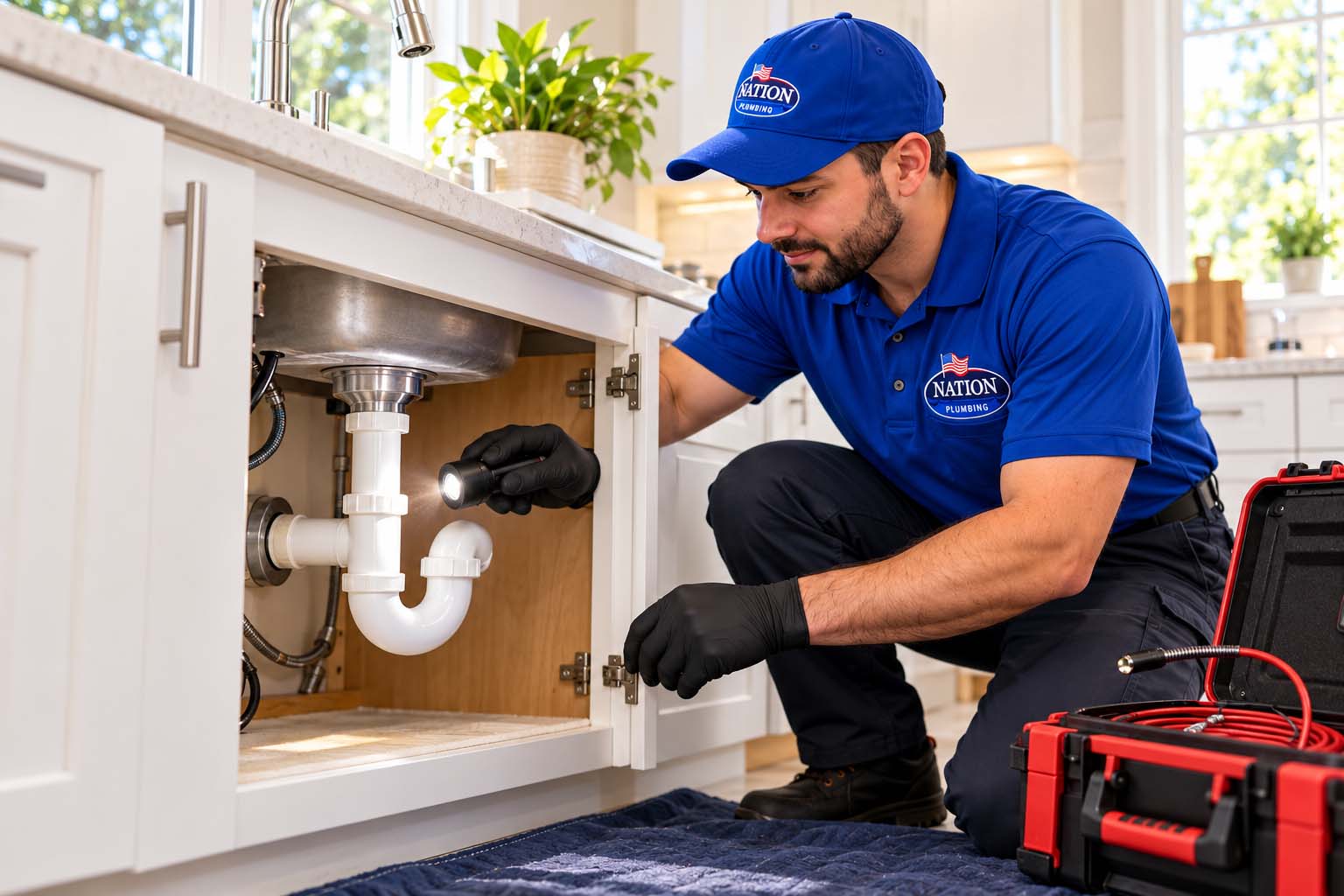
A useful evaluation starts with the history of the problem.
Nation Plumbing can review questions such as:
- How often does the sink clog?
- Does it affect one bowl or both?
- Does the disposal operate normally?
- Does the dishwasher trigger a backup?
- Are other drains in the home affected?
- What has already been tried?
- Did the problem begin after an installation or remodel?
Depending on the findings, service may involve inspecting accessible connections, clearing the trap, servicing the disposal, or cleaning the drain farther downstream.
Drain Cleaning
Drain cleaning may address an obstruction in the kitchen drain or a connected line. The tool and approach should suit the location of the blockage and the condition of the plumbing.
Sewer Camera Inspection
A camera inspection may be useful when symptoms suggest a problem farther along an accessible drain or sewer line. It is not necessary for every kitchen sink clog, and standing water or heavy buildup can limit visibility.
Hydro Jetting
Hydro jetting may be considered for suitable lines with substantial buildup. A plumber should evaluate pipe condition and access before recommending it.
Pipe or Connection Repairs
If an installation issue or damaged component contributes to the recurring problem, cleaning alone may not provide a lasting solution. Repairs should address the findings from the evaluation.
How to Help Prevent Another Kitchen Sink Clog
A few consistent habits can reduce what enters your kitchen drain:
- Keep grease out. Collect cooking fats and oils instead of pouring them into the sink.
- Scrape dishes first. Remove food before rinsing plates and cookware.
- Use a strainer. Catch scraps before they enter the drain.
- Follow disposal instructions. Use suitable quantities of food and the recommended water flow.
- Address slow drainage early. A developing restriction is easier to investigate before the sink stops draining completely.
- Notice changes. New noises, leaks, or dishwasher-related backups are useful clues.
These habits help reduce preventable buildup. They will not correct an existing pipe defect or remove every established blockage.
Frequently Asked Questions About Kitchen Sink Clogs
Why does my kitchen sink clog even though I have a garbage disposal?
A disposal breaks food into smaller pieces, but wastewater still has to travel through the drain. Grease, accumulated debris, a jammed disposal, or a downstream restriction can still cause a backup.
Why does water come up on the other side of my double sink?
The two bowls typically connect to shared drain piping. A restriction after their connection can cause water from one bowl to rise into the other. The blockage’s exact location requires evaluation.
Why does my kitchen sink back up when the dishwasher runs?
Dishwasher wastewater commonly enters the kitchen sink’s drain system. A restriction or connection problem can cause that water to back up into the sink. Avoid running the dishwasher until the problem is resolved.
Does a recurring kitchen clog mean I need new pipes?
Not necessarily. Buildup or a localized blockage may be responsible. Pipe repair or replacement should be based on an evaluation, rather than assumed from the clog alone.
How often should a kitchen drain be professionally cleaned?
There is no single schedule that fits every home. Usage, pipe condition, and previous problems all matter. If your sink repeatedly slows down or backs up, ask a plumber to evaluate the cause and recommend an appropriate approach.
When should I call a plumber?
Schedule service when the clog repeatedly returns, the sink will not drain, water leaks beneath the cabinet, or dishwasher use causes a backup. Seek prompt help when multiple fixtures back up, wastewater overflows, or water reaches electrical equipment.
Get Help With a Kitchen Sink That Keeps Clogging in Converse
You should not have to work around a backed-up kitchen sink every time you cook or wash dishes.
Nation Plumbing helps Converse homeowners with drain concerns, garbage disposal problems, and plumbing repairs. We review the symptoms and accessible plumbing, then explain suitable service options based on what we find.
Contact Nation Plumbing to schedule kitchen drain service in Converse, TX, and get clear answers about why your sink keeps clogging.